

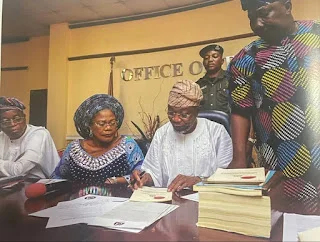
Conversations about Rauf Aregbesola’s time as governor of Osun often get emotional, swinging between harsh criticism and glowing praise. But many of these arguments ignore the tough economic reality Nigeria faced then. Between 2014 and 2016, the country fell into a recession that crippled state finances. In fact, 23 states couldn’t pay salaries at all. Osun wasn’t spared — its federal allocation dropped drastically, and internally generated revenue fell, leaving the government with extremely limited options.
Thank you for visiting The Vestigator, don't forget to share!
A common misconception is that Aregbesola deliberately chose to pay half salaries. That is false. The decision came from the Labour Government Salary Apportionment Committee, a joint body of labour unions and government officials. They agreed on a temporary salary modulation plan to avoid mass job losses during the recession. Even then, more than 70% of workers — including junior staff, teachers, health workers, and local government workers — continued receiving full salaries and full pensions. The modulation affected mainly senior staff and political office holders.
Another widely circulated claim is that Aregbesola left the modulated salary system for his successor, Gboyega Oyetola, to inherit. Official records prove otherwise. Most of the outstanding salary balances had already been cleared before Aregbesola handed over, and full salary payments had resumed eight months before his tenure ended.
Despite the financial challenges, Osun still moved forward with several major development efforts. The School Feeding Programme provided meals to 254,000 pupils every school day — an initiative so successful that it later inspired a national adoption. Thousands of classrooms were built or renovated, the OYES programme provided opportunities for unemployed youths, and road construction continued across the state.
Of course, the recession caused real hardship for many families, and their pain is valid. But genuine feelings should not replace verified facts. Throughout the crisis, the administration remained transparent, and Aregbesola’s continued popularity at the grassroots today shows that many still recognise the lasting impact of his policies.
The Aregbesola years were not perfect — no administration is — but they were marked by both serious economic constraints and tangible progress. Online narratives built on half-truths may generate engagement, but they cannot erase the documented reforms, infrastructure projects, and social programmes that helped reshape Osun during one of the toughest economic periods in Nigeria’s history.
