


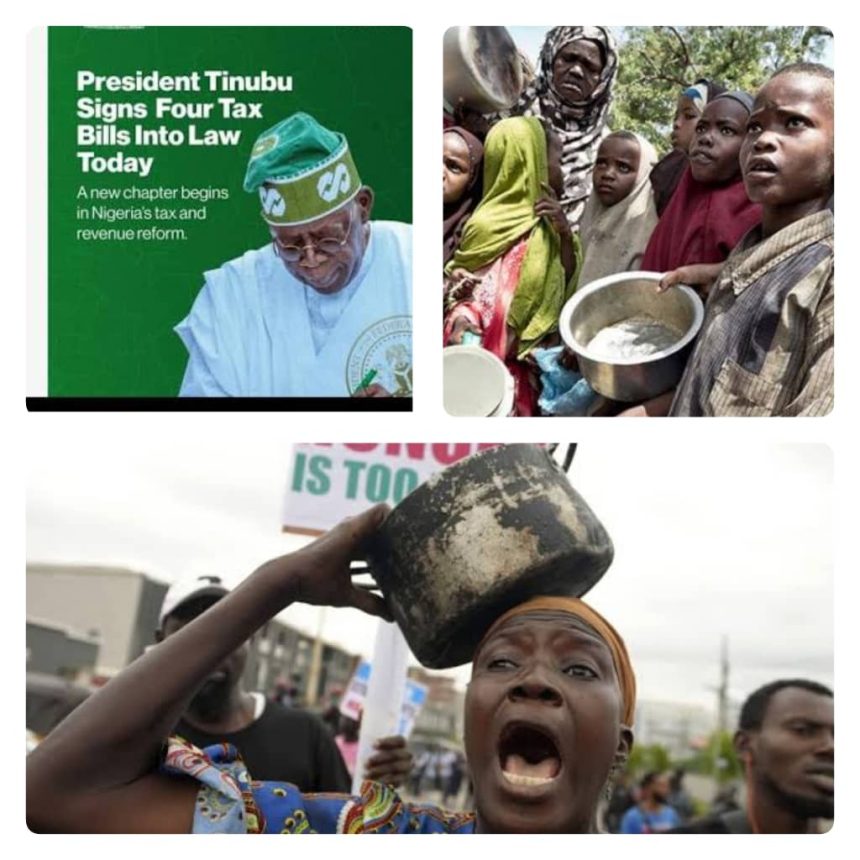
When Nigerians first began saying #Ebinpawa, it wasn’t just a joke—it was a scream from the heart. A weary cry from a people stretched beyond endurance. And now, with President Bola Ahmed Tinubu’s new 15% fuel import duty, that cry has grown louder. For citizens already bleeding from endless “reforms,” this feels less like progress and more like punishment.
Thank you for visiting The Vestigator, don't forget to share!
You can’t help but ask, as many now do with bitter nostalgia: Would Awolowo ever have done this to his people?
Between Reform and Ruin
Tinubu’s government calls it reform—a pathway to economic recovery. But for millions of Nigerians, it feels like betrayal dressed up as policy. Every new “adjustment” seems to take more from those who already have nothing left to give.
Since the removal of fuel subsidies and the floating of the naira, prices have skyrocketed. Now, this 15% fuel duty adds insult to injury. The government promises a stronger economy, but all the people see are weaker households, shuttered businesses, and empty dinner tables.
The Human Cost
For ordinary Nigerians, economics isn’t theory—it’s food on the table, transport to work, and a roof overhead.
A man who once spent ₦2,000 on transport now spends ₦3,000.
A food vendor pays double for cooking gas.
A barber struggles to fuel his generator.
Farmers can barely afford diesel, and small business owners watch their dreams fade with every blackout.
Behind every statistic of “growth” lies a story of sacrifice—children pulled out of school, families skipping meals, and ambitions fading into survival.
Taxing Misery in the Name of Reform
The tragedy of this policy isn’t just in its effect—it’s in its intent.
Governance has turned into a spreadsheet, and citizens have become mere numbers on it.
Fuel—a basic necessity—is now treated like a luxury. The government calls it “fiscal prudence.” But what it really shows is moral blindness. A system that balances its books by breaking its people is not reforming—it’s exploiting.
When you tax pain, you sow resentment. When you justify it as reform, you lose empathy.
The Politics of Pain
Let’s be honest—this isn’t just about economics. It’s political.
A government that preaches sacrifice yet shields its elites from suffering cannot claim fairness.
While the powerful remain insulated from hardship, the poor are told to “tighten their belts,” as if hunger were a patriotic act. Tinubu’s call for “sacrifice today for a better tomorrow” has lost meaning. When sacrifice becomes endless, it stops being noble—it becomes institutionalized suffering.
A Nation Under Siege
Even across the ocean, the world is taking notice. Former U.S. President Donald Trump recently condemned the growing violence in Nigeria, describing it as a “slow-motion genocide” against Christians. His remarks have reignited international attention on Nigeria’s deepening insecurity and the government’s troubling silence.
While Nigerians struggle with economic despair, they also live in fear—of kidnappers, of bandits, of extremists. You can’t reform an economy that’s bleeding from insecurity. There’s no prosperity in a nation drowning in fear.
At the Crossroads
This new 15% fuel duty is more than a fiscal policy—it’s a moral test.
How much more can Nigerians endure in the name of reform?
How long before faith in government gives way to the instinct for survival?
Awolowo once said, “The worst crime is poverty in the midst of plenty.” Today, Nigerians live that truth every day—surrounded by promises, yet starving for progress.
#Ebinpawa isn’t just a hashtag. It’s the heartbeat of a nation gasping for relief.
If leadership doesn’t listen, the “reform” they celebrate will be remembered as the betrayal that broke a people.
What True Progressives Would Have Done
True progressives don’t talk—they act.
They don’t deflect blame—they solve problems.
Chief Obafemi Awolowo proved this decades ago. His vision was built on welfarism and modernization—free education, free healthcare for children, and policies that empowered communities, not crushed them. He built Africa’s first TV station, created industrial hubs like Ikeja, and supported cocoa farmers through cooperatives.
He believed that education, health, and infrastructure were the foundations of prosperity. He didn’t ask people to suffer for progress; he gave them the tools to build it.
If Awolowo were alive today, he would have put people first—creating soft landings for the vulnerable, not policies that deepen poverty.
But today, the man who calls himself a progressive governs through hardship. Nigerians can no longer feed themselves. Insecurity reigns. Children are dropping out of school. The cost of living is claiming lives.
And through it all, the people cry out once again:
#Ebinpawa — Enough is enough.

