


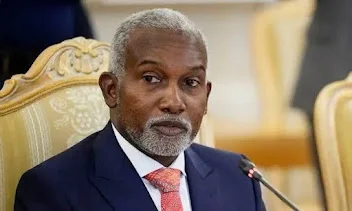
Former Minister of Foreign Affairs, Ambassador Yusuf Tuggar, has dismissed reports suggesting that he criticized President Bola Ahmed Tinubu, insisting that his remarks were misunderstood and taken out of context amid rising political tensions within the All Progressives Congress (APC) in Bauchi State.
In a statement released on Sunday, Tuggar reaffirmed his loyalty to President Tinubu and expressed continued support for the administration’s Renewed Hope Agenda, moving swiftly to counter speculation of any disagreement between him and the President.
The clarification came after reactions trailed a Hausa-language interview in which Tuggar discussed developments within the APC in Bauchi State. Some portions of the interview, widely circulated on social media, were interpreted as criticism of Tinubu, an allegation Tuggar firmly denied.
According to the statement, the minister’s comments had nothing to do with questioning or criticizing the President, describing such claims as false and a deliberate misrepresentation of his views.
Tuggar explained that his concerns were centered on internal party affairs, particularly issues relating to candidate selection and democratic processes within the APC in Bauchi State as political activities ahead of the 2027 governorship election begin to gather pace.
At the heart of the debate is the process through which the party’s governorship candidate should emerge. Tuggar reportedly raised concerns about efforts to influence the selection process rather than allowing aspirants to compete openly before party delegates.
He emphasized that the future strength of the APC depends on credible, transparent, and competitive internal elections that give members the freedom to choose their preferred candidates. According to him, all aspirants should have equal opportunities to seek support without undue interference.
The former minister also referenced President Tinubu’s directive requiring political appointees with elective ambitions to resign within the stipulated timeframe, noting that anyone interested in contesting remains free to follow the established procedures and pursue their political goals.
Despite the controversy, Tuggar maintained that his comments were intended to strengthen the APC, not create division. He warned that unresolved grievances and perceptions of injustice could threaten party unity and urged the APC leadership to uphold fairness, inclusiveness, and internal democracy.
Political analysts see the statement as an effort to separate Tuggar’s support for President Tinubu from his concerns about local party politics in Bauchi, where influential figures are already positioning themselves ahead of future elections.
The development highlights the challenges facing the APC as it seeks to maintain unity while balancing competing interests and ambitions ahead of the 2027 electoral cycle.
As political alignments continue to take shape across the country, Bauchi is emerging as a key battleground for the ruling party. Tuggar’s intervention is therefore likely to contribute to broader discussions within the APC about internal democracy, candidate selection, and political succession.
For now, however, Tuggar has made his position clear: his loyalty to President Tinubu remains intact, even as he advocates reforms aimed at strengthening the party’s democratic processes.
Thank you for visiting The Vestigator, don't forget to share!

